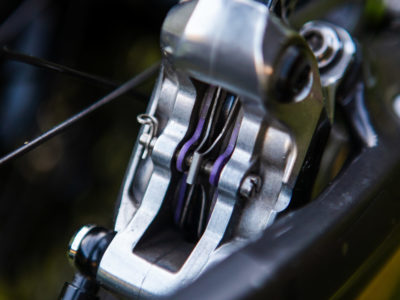
Brake maintenance is one of the most important tasks for any cyclist. While replacing brake pads is relatively simple, several mistakes can occur during installation. These errors can lead to issues such as excessive noise or the dreaded glazing. Both directly affect braking efficiency and can result in a less-than-ideal riding experience. Below, we analyse the five most common mistakes cyclists make when installing new brake pads, how they impact performance, and how to avoid them.
Not cleaning the rotors properly before installing the pads
One of the most common mistakes when installing new brake pads is failing to properly clean the rotors. Brake rotors must be completely clean before installing new pads. If dirt or grease remains on the rotor, it can transfer to the pads, creating an unwanted layer on the pad surface and producing continuous noise when braking. This contamination can also contribute to glazing, a condition where pads become slippery and lose braking efficiency.
To avoid this, it is recommended to use brake-specific cleaners and ensure the rotor is free from residue. Additionally, avoid touching braking surfaces with bare hands to prevent natural skin oils from contaminating them.
Not allowing proper bedding-in of the pads
Another common mistake is failing to bed-in new brake pads before regular use. Brake pads require a bedding process to properly adapt to the rotor surface. If this process is skipped, the pads may produce noise and offer suboptimal braking. Without proper bedding-in, the pads may create irregular contact with the rotor, resulting not only in unpleasant noise but also in premature wear.
It is essential to follow the manufacturer’s recommendations for bedding-in, which usually involves gradually applying the brakes over a set period, alternating between light and stronger braking. This allows the pads to adapt to the rotor and ensures optimal performance.
You can check Galfer’s recommendations here: https://galfer.eu/bike/wp-content/uploads/sites/3/instrucciones-fb.pdf
Using low-quality or incompatible brake pads
Using low-quality or incompatible brake pads is another common cause of noise and glazing. Not all brake pads are suitable for all braking systems or riding conditions. If the pads are not high quality or are not the correct type for the rider’s style or braking system, they may fail to provide adequate friction, resulting in poor contact with the rotor and unwanted noise.
Incompatible pads may also fail to distribute pressure evenly, leading to irregular wear and eventually glazing. It is crucial to ensure the pads come from a reputable brand and are compatible with the bicycle’s braking system.
Not checking pad alignment with the rotors
Many cyclists overlook the importance of checking pad alignment after installation. If the pads are not properly aligned, they may fail to make uniform contact with the rotor. This can create hot spots, cause material buildup on the pads, and eventually result in glazing.
To avoid this issue, make sure the pads are perfectly aligned with the rotor before tightening the caliper bolts. Some braking systems include alignment adjusters that make this process easier. If not, manual adjustments may be necessary to ensure even contact.
Not allowing enough time for pads to settle
Another common mistake is not allowing new pads enough time to properly settle. When pads are new, the friction material must adapt to the rotor surface. If the cyclist does not give enough time for this process, the pads may generate noise and fail to provide effective braking. Lack of proper settling can also cause material accumulation on the pad surface, leading to glazing and reduced braking performance.
It is advisable to allow a period of gentle braking, applying the brakes moderately so the pads can gradually adapt to the rotor.
How to prevent noise and glazing when installing new pads
To avoid issues such as noise and glazing, follow these additional recommendations: choose high-quality pads compatible with your brake system, clean the rotor thoroughly before installation, and avoid touching braking surfaces. Proper bedding-in is essential to prevent noise and ensure optimal performance.
Correct alignment and allowing adequate settling time are also key to ensuring brakes operate correctly. Finally, remember that brakes are a vital safety component, so taking the time to install and maintain brake pads properly is always worthwhile.